
How Does a Magnetic Sheet Separator Work?

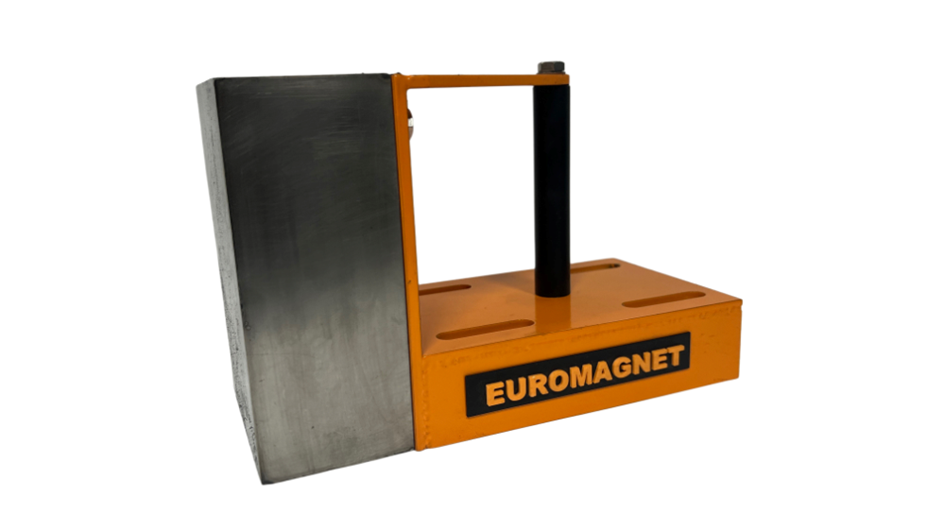
A magnetic sheet separator automatically pushes apart steel sheets that cling together in a stack, helping an operator or automated machine pick up one sheet at a time.
Cold-rolled or oiled steel sheets can stick together.
The separator helps address this problem, improving the safety and speed of production.
Permanent-magnet system
Inside is a strong permanent-magnet block, usually ferrite or neodymium, which:
directs a magnetic field into the sheets,
and fans apart the upper layers of the stack.
Why do the sheets lift apart?
A strong permanent-magnet block, usually ferrite or neodymium, directs its field into the sheets and fans apart the upper layers of the stack.
The magnetic field magnetises adjacent steel sheets so that like poles repel one another. The stack gradually opens, with the sheets spreading apart like a fan.
The magnetic separation action is passive and requires no electrical supply or moving mechanism. The permanent magnet itself does not generate heat during this operation.
Construction:
A robust steel body surrounds the magnet block, helping direct magnetic flux and improve the system's effectiveness.
A sturdy handle is sized to suit the equipment.
It makes the separator easier to move and position.
Mounting holes allow attachment to a support unit or stand.
In larger plants, it can be mounted on a fixed support.
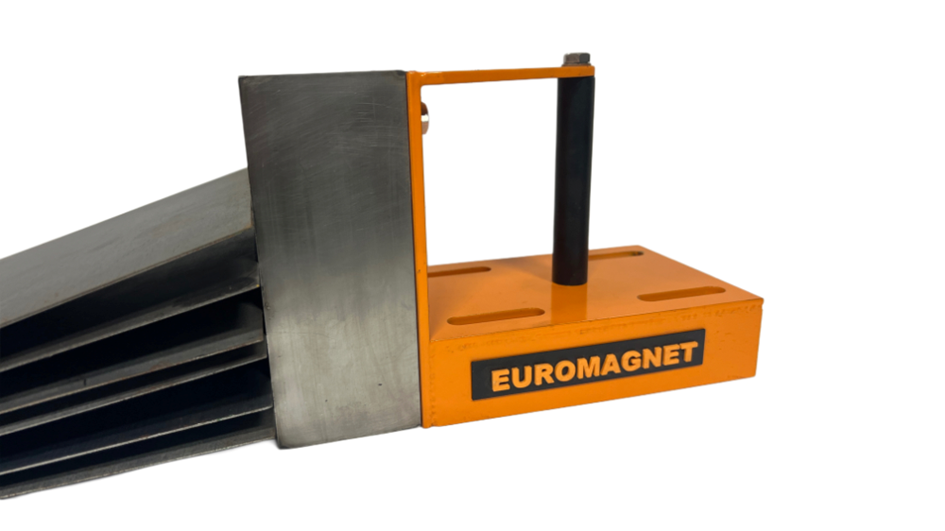
Where is it used?
Metalworking and press feeding,
press-brake operations,
feeding welding robots,
automated sheet-processing equipment,
stacking and unstacking stations,
and applications involving thin steel sheets that stick together, with the suitable thickness depending on the separator model.
Advantages of a magnetic sheet separator:
Operation without an electrical supply
Low maintenance requirements
Long service life
Can support safer and faster handling
Quiet operation, without heat generated by the permanent magnet
Compact dimensions and straightforward repositioning
Typical technical specifications

Specifications depend on the manufacturer and model. Example ranges quoted for this type of equipment include:
Magnet type: ferrite / neodymium
Maximum sheet thickness: approximately 0.5–6 mm, depending on model
Sheet dimensions: approximately 500 × 500 mm to 2000 × 1500 mm, depending on the installation
Separation distance: approximately 80–150 mm, depending on arrangement
Temperature resistance: approximately 80–250 °C, depending on magnetic material and construction
Magnetic flux density: approximately 20–120 mT, depending on model
You can find magnetic sheet separators among Euromagnet Hungary's products. Confirm the actual specifications for your application before selection.



Comments