Magnetic Separation
Key Facts and Applications
Metal separation removes unwanted metallic contaminants from a material flow to protect process equipment, improve finished product purity and reduce the risk of downtime. This is particularly important when processing powders, granules, bulk products, liquids or recyclable materials, as even small metal fragments can cause equipment damage or quality problems.
-
Magnetic separation systems reliably retain or extract ferromagnetic contaminants from the material flow. The right solution depends on the material type, particle size, flow pattern and installation location. Different designs suit free-flowing powders and granules, pipelines, liquids and conveyor applications. Enclosed designs have the advantage that the magnetic system is not directly exposed to the surrounding environment during cleaning.
-
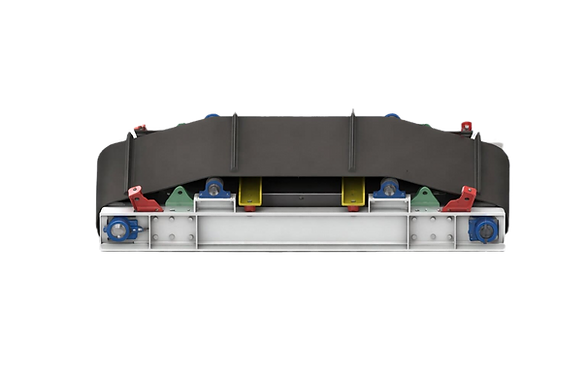
Not all metals can be separated using the same principle. Conventional magnetic systems primarily remove iron and other ferromagnetic contaminants. Non-magnetic but electrically conductive metals require specialised eddy current separation. Eddy current systems use this principle to separate conductive materials that do not respond to a static magnetic field.
-
A well-chosen metal separation system improves product quality while protecting machinery and supporting safe, reliable operation. Effective performance requires consideration of throughput, contaminant size, the process environment and the cleaning method. These factors are particularly important for continuous operation and sensitive production lines. A system tailored to the application supports cleaner, more reliable and more economical operation over the long term.
For more information on practical metal separation applications, read our articles on the subject or contact us.


_edited.png)